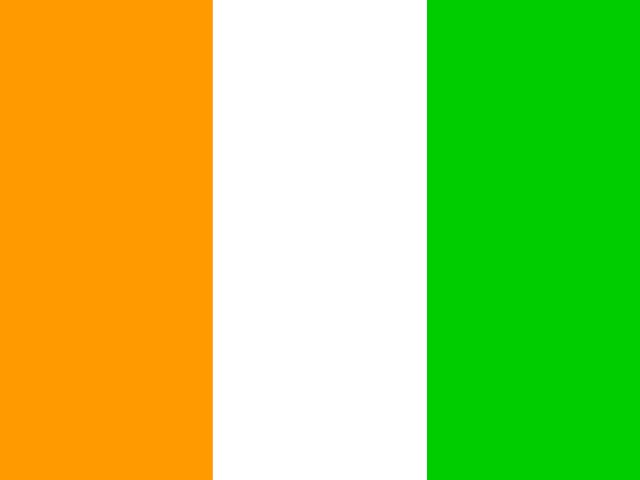
Ivory Coast
Africa · West African CFA franc (XOF) · 32.7 million people
Inflation
1.6%
▲ 0.4 pt since August · Sep 2026
GDP per person
US$3,050
▲ 6.0% real growth in 2024
Unemployment
2.3%
2025
Inflation and the interest rate
Inflation was 1.6% in Sep 2026, up from 1.2% in August. The interest rate has been 2.50% since Sep 2013.
Monthly, consumer prices year on year.
Exchange rates
Closing rates on 12 Nov 2026. Changes are over 30 days.
US$1 in XOF
590.3
▲ +0.8%
€1 in XOF
655.8
▼ −0.0%
£1 in XOF
785.3
▲ +1.1%
¥1 in XOF
3.700
▲ +0.1%
CN¥1 in XOF
88.59
▲ +1.2%
₹1 in XOF
6.297
▲ +2.8%
Moves are neutral, so they're shown in ink with ▲/▼. All exchange rates
Cost of living
Price level
2024
Prices in Ivory Coast are 39% of the US level.
Minimum wage
Monthly, full time · 2024
F CFA 75,000 a month
about US$127
Price level: the World Bank's purchasing power parity factor divided by the exchange rate, with the US at 100. Minimum wage from ILOSTAT.
Economy at a glance
GDP
2024
US$87.1 billion
GDP growth
2024
6.0%
6.6% in 2023
GDP per person at PPP
2025 · international dollars
US$8,200
Population
2025
32.7 million
▲ 2.4% vs 2024
Government debt
1995
171% of GDP
Current account
2024
−4.5% of GDP
−8.1% in 2023
Prices in Ivory Coast
Subscription prices here, with tax, compared with other countries.
More about Ivory Coast
From the World Bank's World Development Indicators. Each figure shows its latest year, with the year before.
People
Life expectancy
2024
62.1 years
61.9 years in 2023
Births per woman
2024
4.23
4.28 in 2023
Living in towns and cities
2024
54.0%
53.4% in 2023
Population density
2023
98 per km²
96 per km² in 2022
Net migration
2025
+11,300
+7,800 in 2024
Work
In the labour force
2025 · ages 15+
67.1%
67.1% in 2024
In work
2025 · ages 15+
65.5%
65.6% in 2024
Youth unemployment
2025 · ages 15–24
4.0%
4.2% in 2024
Living standards
Income per person
2024 · GNI, US dollars
US$2,530
US$2,510 in 2023
Income per person at PPP
2024 · international dollars
US$7,360
US$6,960 in 2023
Household spending per person
2024 · 2015 US dollars
US$1,480
US$1,470 in 2023
Living on under $3 a day
2021 · 2021 prices
20.8%
21.7% in 2018
Below the national poverty line
2021
37.5%
39.5% in 2018
Income inequality
2021 · Gini, 0–100
35.3
37.2 in 2018
Government and trade
Tax revenue
2023
13.0% of GDP
11.8% of GDP in 2022
Government spending
2023
17.9% of GDP
18.4% of GDP in 2022
Military spending
2024
0.8% of GDP
0.9% of GDP in 2023
Exports
2024
26.0% of GDP
22.4% of GDP in 2023
Imports
2024
25.2% of GDP
26.4% of GDP in 2023
Foreign investment inflows
2024
3.6% of GDP
3.1% of GDP in 2023
Remittances received
2024
2.0% of GDP
1.6% of GDP in 2023
Health and education
Health spending per person
2023
US$90
US$80 in 2022
Health spending
2023
3.4% of GDP
3.6% of GDP in 2022
Under-5 mortality
2024
64.5 per 1,000 births
66.5 per 1,000 births in 2023
Maternal mortality
2023
359 per 100,000 births
409 per 100,000 births in 2022
Secondary school enrolment
2024 · gross
65.3%
64.0% in 2023
University enrolment
2024 · gross
12.3%
11.6% in 2023
Adult literacy
2021
50.0%
57.0% in 2019
Energy and technology
Using the internet
2024
41.4%
40.7% in 2023
Mobile subscriptions
2024
184 per 100 people
172 per 100 people in 2023
Access to electricity
2023
72.4%
72.0% in 2022
Electricity use per person
2023
354 kWh
330 kWh in 2022
Renewable share of energy
2021
58.2%
61.8% in 2020
CO₂ emissions per person
2024
0.6 tonnes
0.6 tonnes in 2023
Sources and method
Figures from the IMF, the World Bank and ILOSTAT. Exchange rates are daily rates from the European Central Bank and other central banks, via Frankfurter. Price level is the World Bank's purchasing power parity factor divided by the exchange rate, with the US at 100. “More about Ivory Coast” comes from the World Bank's World Development Indicators, which compile national and international sources. For guidance only. Read the disclaimer
Something wrong or missing? Report a problem